

Speech
the way to words runs through the senses
Articulation games with seeds, berries and spices, games about talking to each other, action words. The child hears verbs and short phrases at the moment of the action.
for little ones aged 2–4, with a parent
Abrikos — “apricot” in Russian — is a sensory and speech development programme for bilingual children. Children hear new words while they move and play.
A child takes a toy car out of a bag, builds a garage and drives it along a route, and at that moment hears the Russian for “drove in”, “drove out”, “arrived”, “drove round”. In Art the same cars leave tyre tracks in paint, and the tracks become a road.
One topic lives for two Saturdays. A week later the child comes back to familiar words, but in new games: building a traffic light from coloured counters, racing cars down a slope to see which goes furthest, and in Rhythm becoming a train themselves.
For younger and older children the same game does different jobs. Two-year-olds understand the action and try out single words. Three-year-olds already say for themselves where they're going and how.
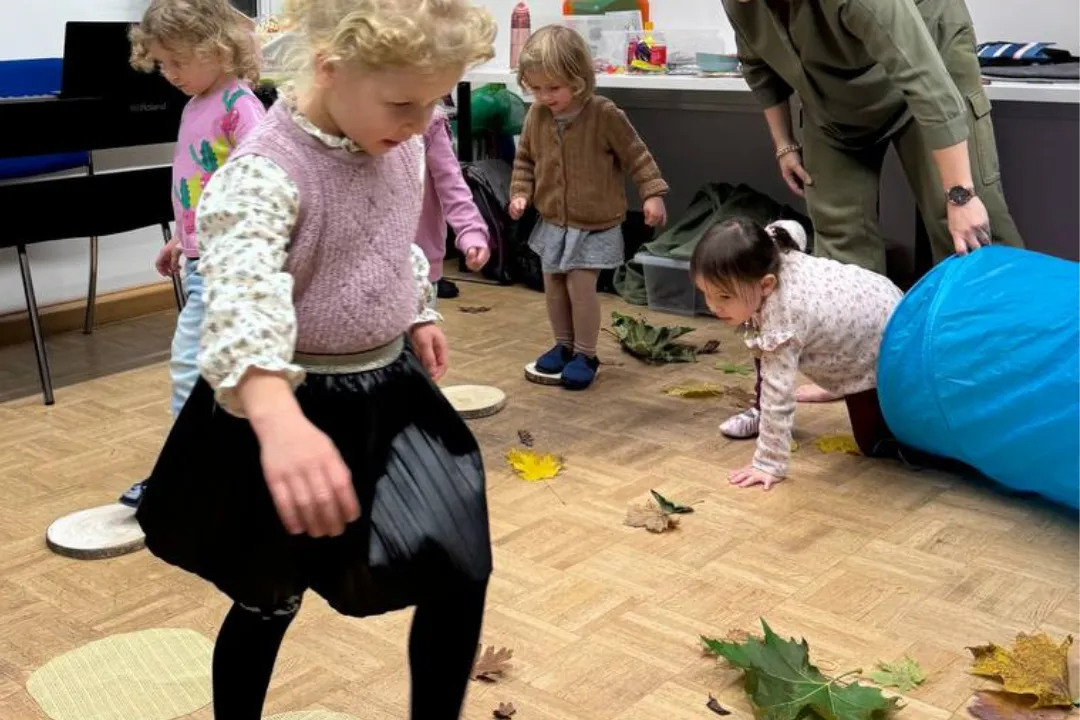
Russian case endings can be felt through the feet. Children walk a sensory path of stones, bumps and boards, and the grammar settles in through movement.
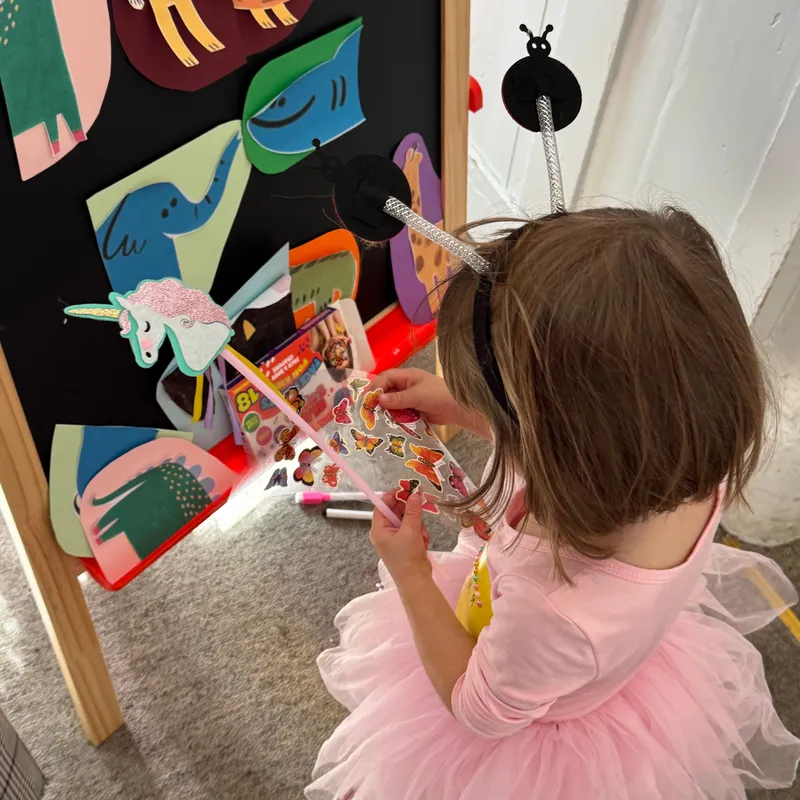
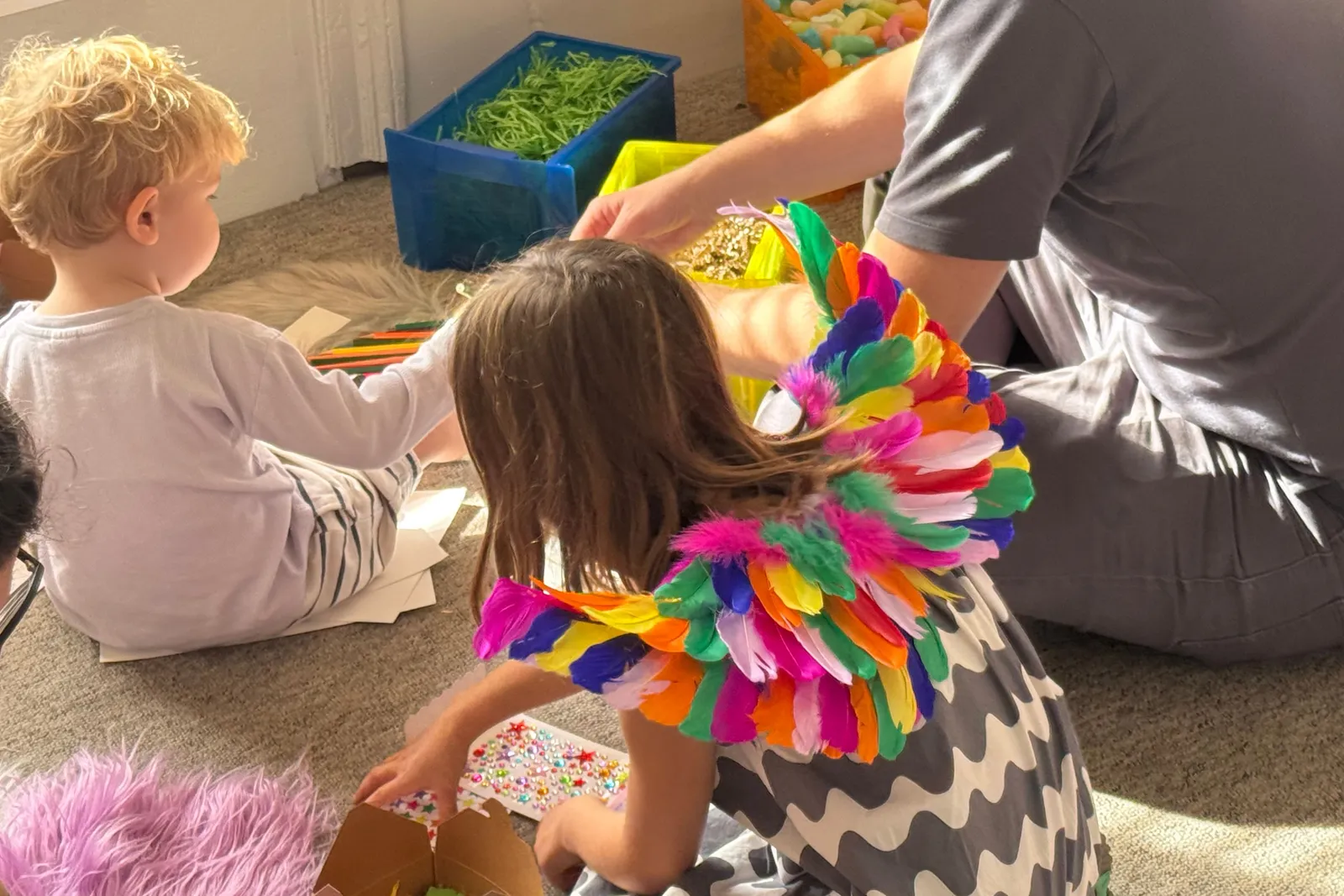
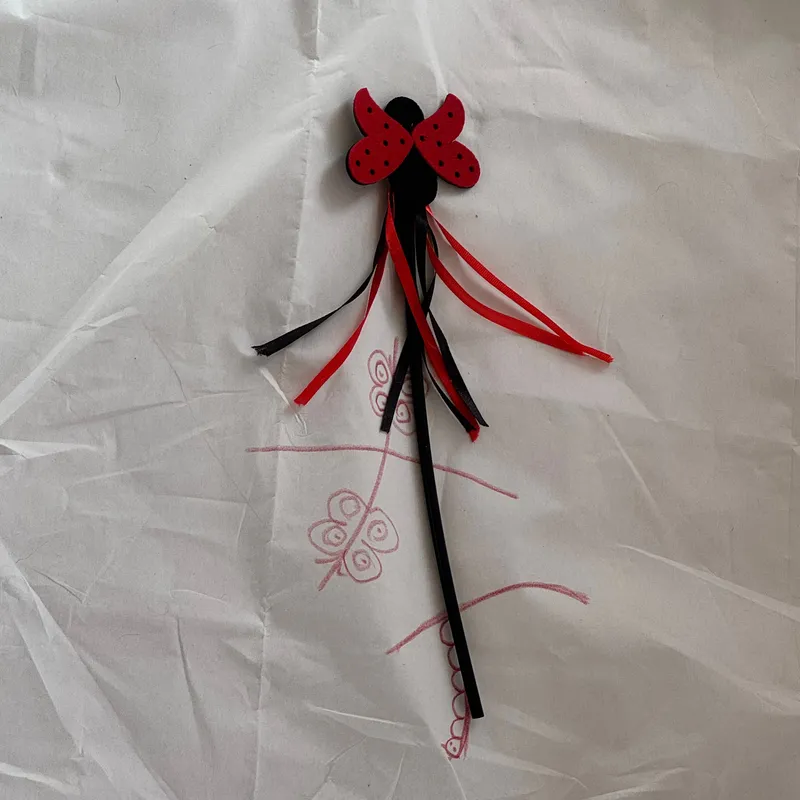
A class lasts 1 hour 20 minutes: two 30-minute blocks with a break. The strands alternate from Saturday to Saturday, and one topic lives for two Saturdays.
the way to words runs through the senses
Articulation games with seeds, berries and spices, games about talking to each other, action words. The child hears verbs and short phrases at the moment of the action.
noticing, comparing, trying things out
Motor tracks, sorting by colour and shape, sequences and mosaics, simple experiments. First the child notices what is happening, then comes the explanation.
a hand getting ready to write
We draw, smear and glue. Different materials in a single class and no model to copy: each child decides what mark to leave.
music as a language
Songs, percussion instruments, “freeze”, “loud and quiet”, “together and in turns”. The teacher doesn't show the “right” moves: the child hears the rhythm and decides how to move.
This autumn's topics: cars, fruit, autumn (rain and leaves), birds in autumn, animals in autumn, presents and the winter festival.
Abrikos prepares children for Children's University, where letters, syllables and first texts come next.
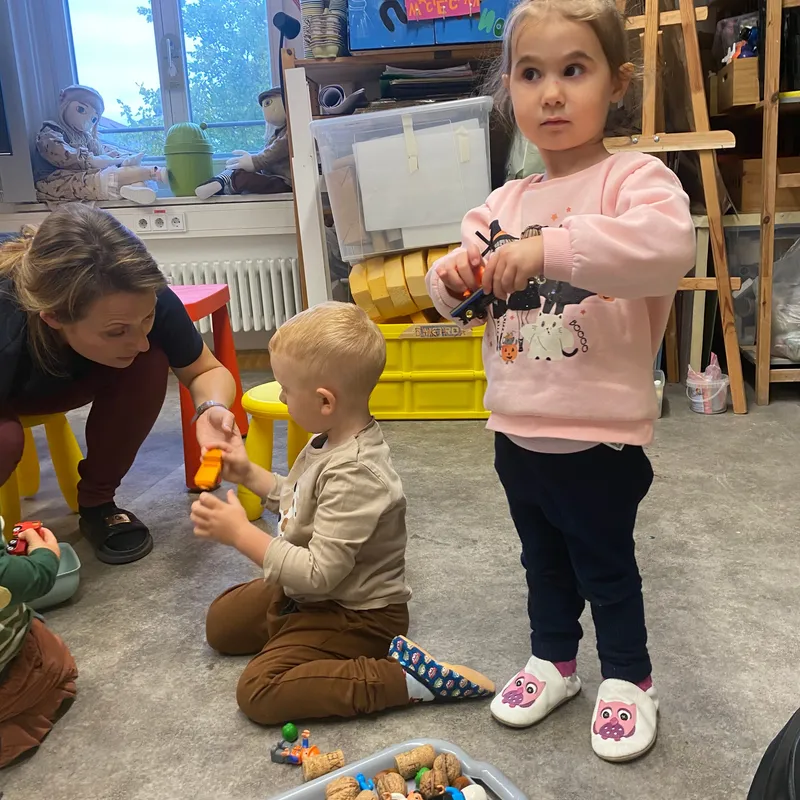
Right there. While your child is settling in, one adult takes part in the class with them; a second can stay close by. You play alongside your child and help them feel calm.
Take glue, for example: help your child get it into their hand, guide gently and let them carry on themselves. There's no need to spread and stick for them. If your child gets distracted, we'll pause and come back to it.
The teacher also tells the grown-ups when to help and when to step back. After a few Saturdays parents move to the side, and later they can leave the room and chat to each other. After roughly 6–8 classes the teacher will suggest that those who are ready try the class without a parent.
Abrikos: music, rhythm and speech
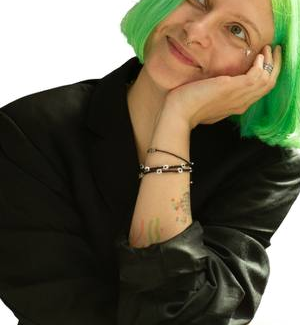
A composer. In Abrikos, music and rhythm run through the whole class: the little ones sing, play percussion and move however they like. As a child she sang everywhere: on the bus, on the way to school and with her grandmother.
She trained at the Moscow Film School and the Ippolitov-Ivanov Institute, writes music for film, theatre and games, works with orchestras and choirs, and has taught creative subjects to children for many years. She also knits, sews and does a lot of crafts with her daughter.
Abrikos, speech and language
A philologist who has worked with bilingual children. In her Logo block a word is always tied to an action: the child does something and names it straight away. As a child she loved reading and acting in the theatre.
She read Russian literature at Oxford. In class the little ones do articulation exercises, play verb games and learn to talk to one another. It matters to her that children are heard and taken seriously, as equal participants in the class.
Classes run every Saturday, and you can come to your first, trial class on any of them. Abrikos also suits little ones who hardly speak any Russian yet.
The trial class is paid separately and isn't part of the block. Once you've sent a request, we'll send you the details and a payment link. A missed Saturday carries over to the next block if you let us know in advance. Groups of up to 8 children.
What to bring: clothes you don't mind getting messy and a spare top. A favourite toy can stay next to your child. No need for indoor shoes: we take our shoes off in the classroom.
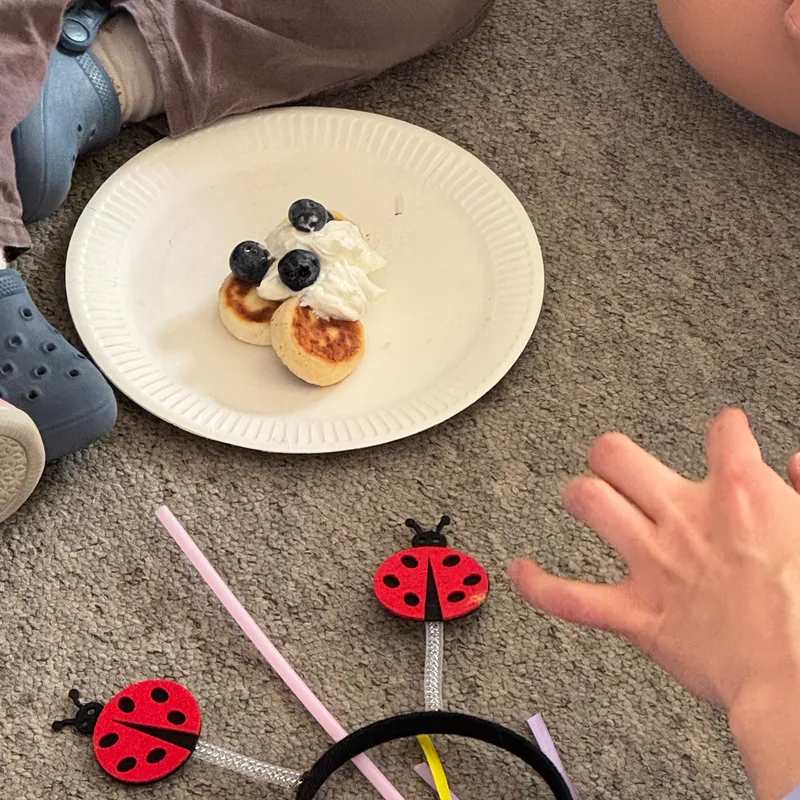
A few days before the class we email parents: what to bring, and which foods will be used in the class in case your child has an allergy.
Leave your name and your child's age, and we'll suggest a group and tell you how to come along. Or message us on Instagram.
Would you like to get to know Abracadabra? Send us a request and we'll help you choose a programme and arrange the first class.